
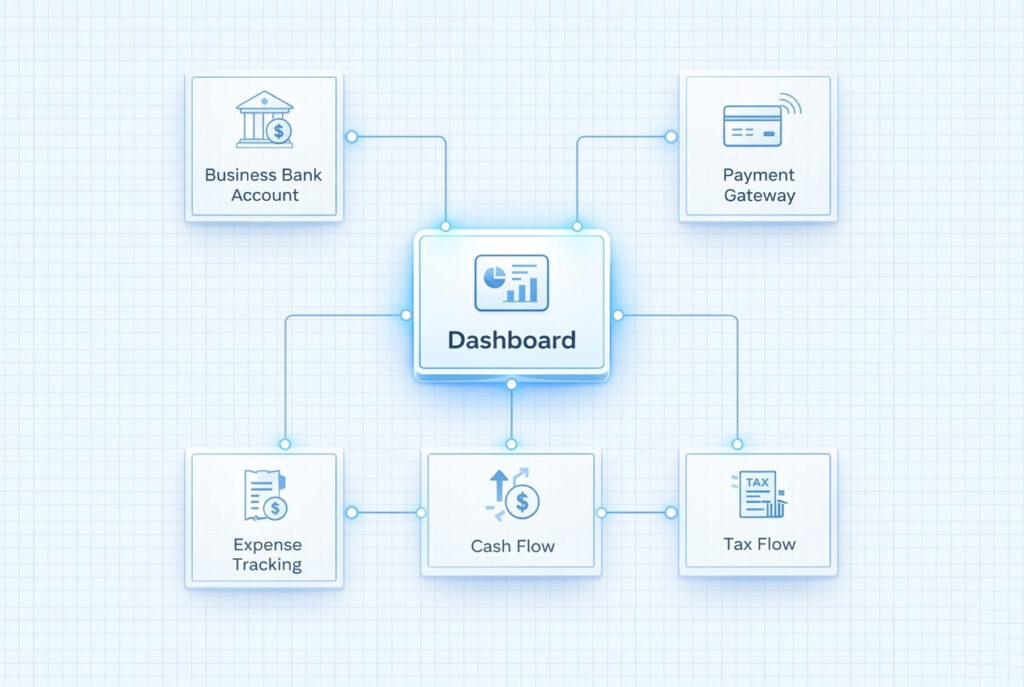

For an SME, a bank account is not just a “bucket for cash”; it is a “Financial Integration Hub.” In a world of real-time commerce, the choice of a banking partner can either accelerate your “Cash Conversion Cycle” or become a bottleneck to your growth.
The “API-First” Banking Requirement In the age of digital transformation, your bank must “talk” to your accounting software. We look for “Direct Integration” capabilities. When your bank feed flows automatically into Xero or QuickBooks, you eliminate 80% of manual bookkeeping. A bank that requires manual CSV uploads is a bank that is costing you labor hours and increasing the risk of data entry errors.
Fee Structures and “Hidden Friction” A “Free” account is rarely free. For a growing business, we analyze “Transaction Velocity.” If you process 500 small payments a month, a bank with high per-transaction fees will erode your margins. Conversely, if you deal with international clients, “Forex Spreads” and “Inward Remittance Fees” are more important than the monthly maintenance charge. A CA will perform a “Sensitivity Analysis” on your expected transaction volume to find the lowest “Total Cost of Banking.”
Credit Facilities and the “Relationship Manager” An MBA understands that you don’t look for a loan when you need it; you build the “Credit Capacity” when you don’t. Choosing a bank that offers a “Business Overdraft” or a “Letter of Credit” (LC) facility is vital for managing working capital swings. The quality of your “Relationship Manager” matters—they are your advocate inside the bank’s credit committee.Segregation of “Operational” vs. “Reserve” Accounts A sophisticated financial setup involves multiple accounts. An Operations Account for daily expenses, a Tax Reserve Account (where you move GST/VAT and Payroll tax collections immediately so you don’t “accidentally” spend them), and a Wealth/Savings Account for idle cash. This “Envelope System” at a corporate level ensures that when the tax man comes calling, the cash is already set aside.