
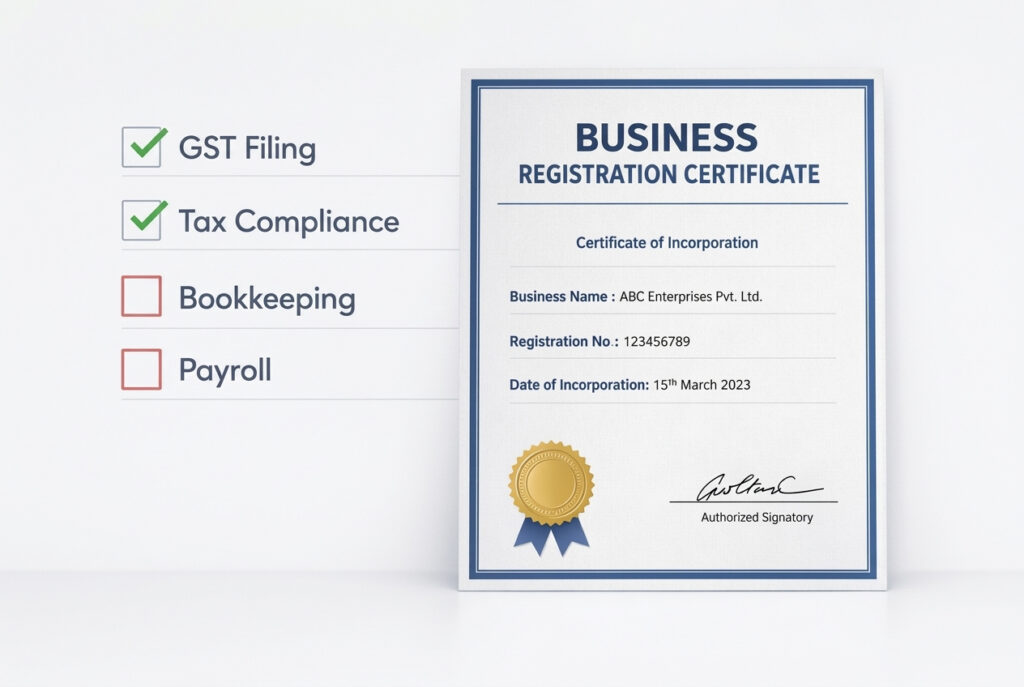

Receiving your “Certificate of Incorporation” is like getting a driver’s license—it gives you the right to operate, but it also subjects you to the “Rules of the Road.” Post-registration compliance is often where new founders stumble, leading to “Striking Off” of companies or heavy personal penalties for directors.
The “First 30 Days” Checklist
- Appointment of First Auditor: Most jurisdictions require the Board to appoint a Statutory Auditor within 30 days. This isn’t just a formality; it’s a foundational requirement for your first annual filing.
- Issue of Share Certificates: Many founders forget to actually “issue” the physical or electronic shares and pay the “Stamp Duty.” Without this, the ownership of the company is legally “inchoate.”
- Disclosure of Interest: Directors must formally disclose their interests in other firms to prevent “Related Party Transaction” conflicts.
The “Statutory Registers” and Minute Books A company is a “creature of record.” You are legally required to maintain a Register of Members, a Register of Directors, and Minute Books for every Board and General Meeting. In an M&A or funding round, the “Due Diligence” team will ask for these first. If your “Corporate Secretarial” records are messy, it signals a lack of professional governance, often leading to a “valuation haircut.”
The “Annual Cycle” of Filings Compliance is not a “once-a-year” event. It includes:
- Income Tax Returns: Based on the fiscal year.
- Annual Returns (ROC): Summarizing the company’s shareholding and management.
- Financial Statement Filings (AOC-4): Providing the audited balance sheet to the registrar.
- Event-Based Filings: Changing a director, shifting the registered office, or increasing authorized capital all require filings within 15-30 days.
The “Cost of Non-Compliance” Modern regulations have shifted from “fixed fines” to “per-day penalties.” A simple delay in filing a form can lead to penalties that grow to thousands of dollars in a few months. As a CA, my advice is simple: Automate your Compliance Calendar. Treat compliance as a non-negotiable “operating cost” rather than an optional “administrative task.”