
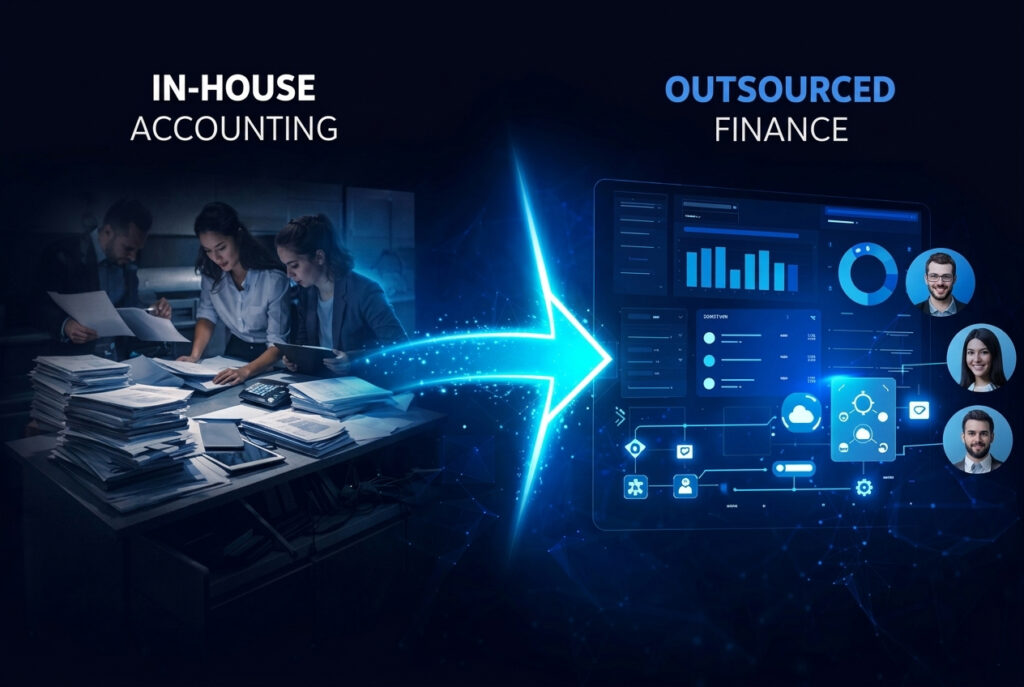

In the classical management framework, the “Core vs. Context” model dictates that leadership should focus solely on activities that create a competitive advantage. For 90% of companies, the back-office finance function is “Context”—necessary for survival but not a driver of brand differentiation. As we look toward 2030, Finance & Accounting Outsourcing (FAO) has evolved from a simple cost-saving measure into a high-level strategic partnership.
The “Talent Arbitrage” and the Global Skills Gap The accounting profession is facing a global talent shortage. Top-tier CAs and CPAs are increasingly moving into advisory and tech roles, making it prohibitively expensive for an SME to hire a full-time, high-level finance team. FAO solves this by providing “fractional access” to elite talent. You get the expertise of a seasoned CFO or a specialized Tax Controller at a fraction of the cost of a full-time hire, leveraging global centers of excellence where accounting talent is concentrated and highly trained.
From Fixed Overhead to Variable “Elastic” Costs In a volatile global economy, “Operating Leverage” is a key metric for any MBA-led organization. Maintaining a large in-house finance team creates a high fixed-cost base that doesn’t shrink when sales dip. FAO converts this into a variable cost. You pay for what you use. During periods of rapid growth or M&A activity, your provider scales up; during lean periods, they scale down. This “Elasticity” protects your margins and ensures the business remains lean and agile.
Risk Transfer and Regulatory Sovereignty The burden of staying compliant with changing tax laws, labor regulations, and accounting standards (IFRS/GAAP) is immense. By outsourcing, you effectively “transfer” the operational risk of non-compliance to a specialist firm whose core competency is staying current. These firms invest millions in cybersecurity, SOC-2 compliance, and continuous professional education—infrastructure that an SME simply cannot replicate.The “Single Source of Truth” for Investors For businesses seeking venture capital or private equity, the “Quality of Earnings” is everything. An outsourced finance partner provides a level of objectivity and professional rigor that internal teams often lack. Having your books managed by a reputable FAO provider increases investor confidence, speeds up due diligence, and ultimately leads to higher company valuations.